
Mental Health
Please note this page is informational and should not act as medical advice or substitute medical attention.
Mental health is as important as our physical health, and is essential to our overall wellbeing. To build and maintain mental wellbeing, communities should promote strategies such as emotional regulation, effective use of social supports, and healthy coping skills. There should also be adequate access to and awareness of services in one’s area.
Strengthening individual mental health and promoting resilience to handling life’s stressors can reduce the risk of mental health and substance use conditions. These skills can support improved general health, wellbeing, violence prevention, productivity, and promote social wellbeing.
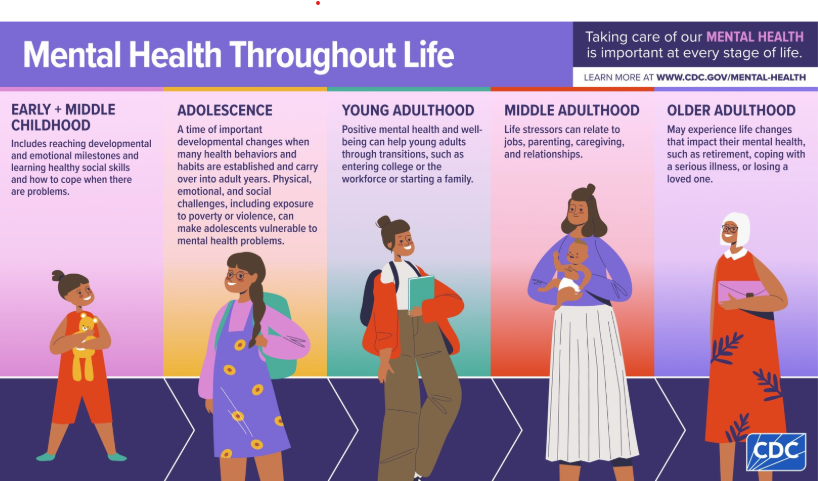
Mental health is important in every stage of life. See the information below from the CDC on what mental health promotion looks like throughout one’s lifespan.
Prevention
Mental health includes emotional, psychological, and social well-being. It affects how we think, feel, and act. It also helps determine how we handle stress, relate to others, and make healthy choices. Mental health is important at every stage of life, from childhood and adolescence through adulthood. More than 1 in 5 US adults live with a mental illness.
The Weber-Morgan Health Department has a goal of reducing the suicide rate in our community by promoting public awareness, creating a suicide-safe community, and providing education and training in suicide prevention in collaboration with our partners: AFSP, NAMI, NUHOPE, Weber Human Services, and the Utah Army National Guard.
Available resources for finding mental health support include:
Crisis Center
Always call 911 first if you or someone you love is experiencing a life-threatening medical emergency or may be a danger to someone else.
If you need assistance locating long-term mental health resources, talking through a problem, or exploring mental health treatment options, call 211 to speak with a live person who can help.
Dial 988 or 1-800-273-8255 for the 988 Suicide and Crisis Lifeline. 988 has been designated as the new three-digit dialing code that will route callers to the National Suicide Prevention Lifeline (now known as the 988 Suicide & Crisis Lifeline). When people call, text, or chat 988, they will be connected to trained counselors that are part of the existing Lifeline network. These trained counselors will listen, understand how their problems are affecting them, provide support, and connect them to resources if necessary.